
Composite or wood: the short answer
Wood costs less to build and asks for regular care to last. Composite costs more up front and asks for little more than cleaning. Neither choice protects a deck from water that has nowhere to go, which is why the structure and the drainage matter as much as the boards you walk on.
The right material depends on how long you plan to stay, how much sun and shade the deck gets, and how much upkeep you want to take on. The sections below compare the two in the conditions an East Tennessee deck actually faces.
What composite and wood decking are made of
Pressure-treated pine is the most common wood decking. It is treated with preservatives so it resists rot and insects. Cedar is a natural alternative with its own resistance to decay, a lighter weight and a warmer color, at a higher price than treated pine.
Composite decking blends wood fibers with plastic, and most boards today have a protective outer shell, often called a cap, that resists stains and fading. PVC decking is made entirely of plastic and resists moisture best.
Whichever boards you choose, the frame beneath is usually pressure-treated lumber. That frame carries the deck, and it is where water does its damage.
How much upkeep each one needs
A wood deck needs cleaning and a fresh coat of sealer or stain every few years to keep water out and keep the color even. Left alone, it weathers to gray, and boards can crack, split or splinter as they swell and dry.
Composite needs no sanding, staining or sealing. Cleaning with soap and water keeps it looking right, and boards in shade may need an occasional wash to clear mildew from the surface.
How each holds up in East Tennessee weather
Humid summers and frequent rain keep a deck damp for long stretches. Wood takes on moisture and gives it back, and that movement is what loosens fasteners and opens cracks in the boards over time. Composite absorbs very little water, so it holds its shape and does not rot the way wood boards can.
Sun matters too. Composite, and darker colors especially, can feel warmer underfoot than wood in full afternoon sun. A lighter color, or shade over part of the deck, helps on a deck that faces south or west.
Why a deck in Farragut rotted, and what changed
On a deck we rebuilt in Farragut, the wood had not simply worn out. Tile had been carried from the house out onto the deck with nowhere for water to drain, so water sat on the structure until it rotted.
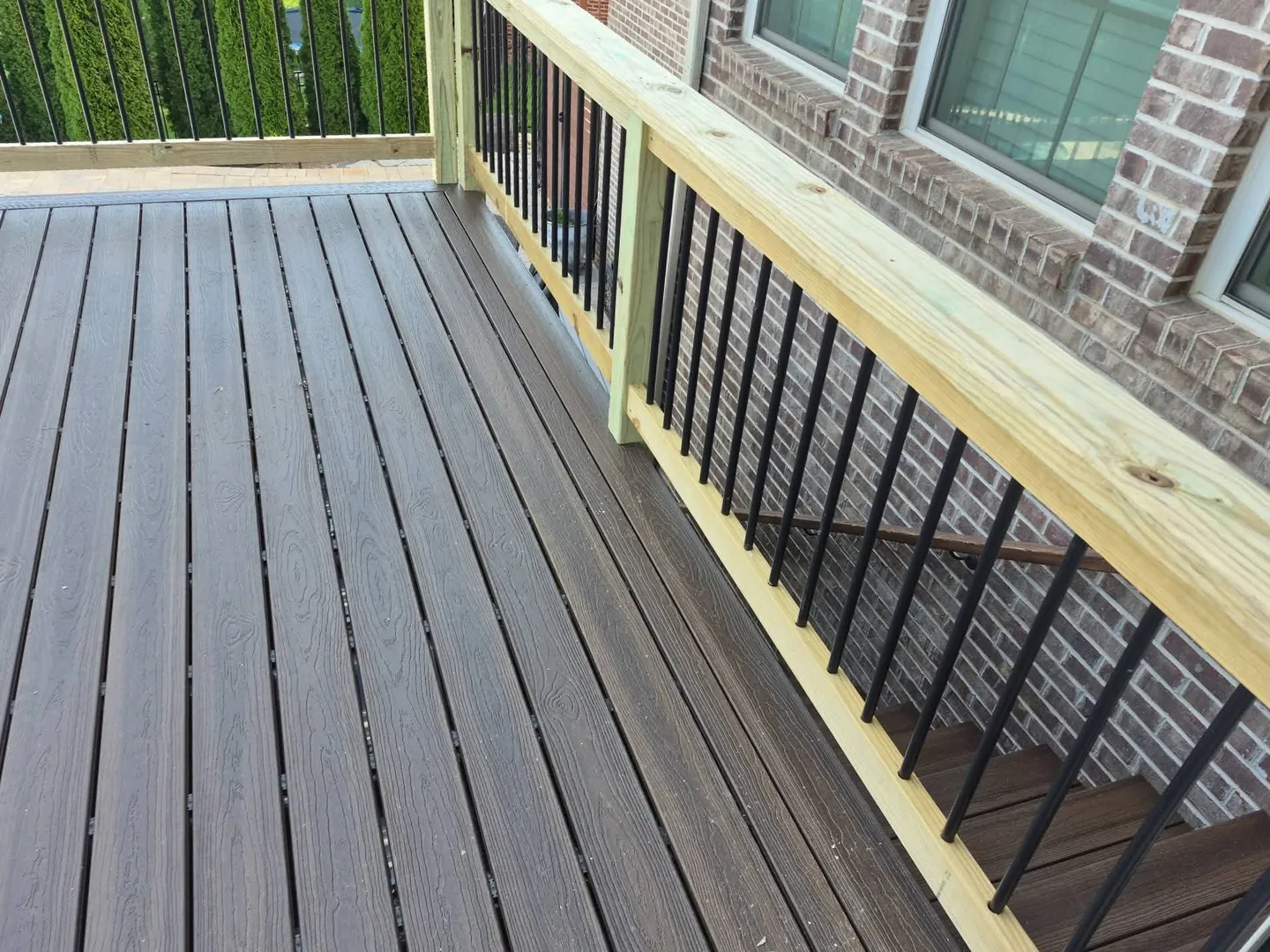
The rebuild used both materials. Where the area is covered, a seamless cut joins the existing surface to the new one. Where it is open to the weather, the deck transitions into composite, with new railings, a light wired into every step and storage built in beneath. Composite went where the weather is hardest on a deck, and the cause of the rot was dealt with rather than built over again.
The lesson applies to any deck. Choose the boards for upkeep and comfort, and plan the drainage, the flashing where the deck meets the house and the spacing between boards so water can always get away.
How the cost compares over time
Composite costs more to buy and install than pressure-treated wood. Wood costs less on the day it is built and more in time and upkeep over the years. If you plan to stay in the house for a long time, compare the two over that whole stretch rather than on the first invoice alone.
Railings, stairs, lighting and storage affect the total as much as the decking does, so they belong in the same conversation. Our deck building page explains what shapes a deck estimate.
Composite and wood, side by side
| Factor | Pressure-treated wood | Composite |
|---|---|---|
| Cost to build | Lower | Higher |
| Upkeep | Cleaning, plus sealer or stain every few years | Cleaning with soap and water |
| Moisture | Swells and dries, and can crack or splinter | Absorbs very little water |
| Full sun | Usually cooler underfoot | Can feel warmer, darker colors most |
| Repairs | Boards can be sanded and refinished | Deep scratches cannot be sanded out |
| Over the years | Weathers to gray unless refinished | Holds its color |
Choosing the right deck for your home
If you want the lowest cost to build and do not mind a weekend of upkeep every few years, wood is a sound choice. If you would rather spend your weekends using the deck than maintaining it, composite earns its higher price. Either way, a deck lasts when the structure under it stays dry.
Tell us about the deck you have in mind and we will help you weigh the options for your yard. Request a free estimate, or see more of our work in Farragut.